
Chronic Pain Management When the Pain Outlasted the Injury
Pain that persists past healing is real, and it works differently. Treating it needs a different approach from treating a fresh injury — one built on pacing, graded activity and understanding.
- Persistent pain patients
- 1,900+ Persistent pain patients
- Years in this field
- 10+ Years in this field
- Pain-trained therapists
- 7 Pain-trained therapists
- Report better function at 12 weeks
- 81% Report better function at 12 weeks
- Longer first appointment
- Paced, not pushed
- Free 20-min assessment

Pain is real — and it is changeable
After about three months, pain stops being a straightforward report of tissue damage. The nervous system becomes more sensitive, and the relationship between how much hurts and how much is wrong loosens. That does not make the pain imaginary; it makes it a different problem to solve.
Our programme combines pain-science education, pacing and graded exposure to the activities you have been avoiding. The aim is a bigger life — more you can do, more reliably — with pain reduction following from that rather than being waited for first.
- A longer first appointment, because the history matters here
- Pacing plans built around your real week, not an ideal one
- Flare-up management written down before you need it
- Honest conversation about what physiotherapy can and cannot change
Pain that has outstayed its welcome
Presentations where pain has persisted beyond normal healing time.
-
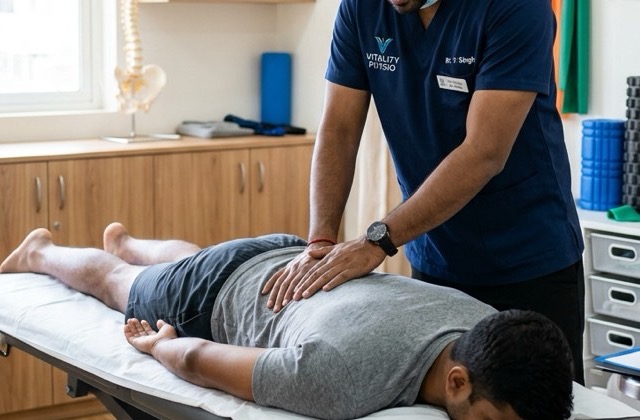
Persistent Low Back Pain
Graded loading and pacing where months or years of back pain have not settled.
-
Fibromyalgia
Paced conditioning, sleep and activity strategies for widespread pain and fatigue.
-

Chronic Neck Pain
Long-standing neck and shoulder pain, often with headache and desk-work history.
-

Osteoarthritis Pain
Living well with worn joints — load management that reduces day-to-day pain.
-

Post-Surgical Persistent Pain
Pain continuing well past the expected recovery window after an operation.
-

Nerve-Related Pain
Burning, shooting or radiating pain from irritated or sensitised nerves.
-

Repetitive Strain Pain
Work-related arm and shoulder pain that has become long-standing.
-
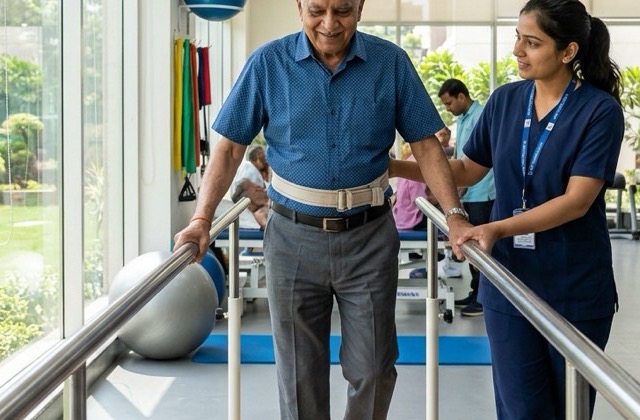
Deconditioning & Fear of Movement
Rebuilding confidence where avoiding activity has shrunk what you can do.
Not seeing your condition? Contact us or call +91 99900 96269.
Bigger life first, less pain after
The order matters. Waiting for pain to go before living more rarely works; the reverse usually does.
Book an Appointment-
01
Pain Science Education
Understanding why pain persists changes how threatening it feels — and how much it hurts.
-
02
Graded Activity
Reintroducing avoided movements in doses small enough not to trigger a flare.
-
03
Pacing Strategies
Breaking the boom-and-bust cycle that keeps sensitising the system.
-
04
Manual Therapy
Hands-on treatment used to open a window for movement, not as the treatment itself.
-
05
Conditioning & Strength
Rebuilding the physical reserve that months of guarding have eroded.
-
06
Flare Management Plan
A written plan for bad weeks, agreed before you need it.
Four stages, patient pacing
Persistent pain does not resolve in six sessions. It does respond to a consistent, well-paced plan.
-
1 20 minutes free
Extended Assessment
A full history of the pain, what has been tried, and what you most want back.
-
2 Weeks 1–3
Understand & Baseline
Pain-science education and honest baselines for the activities that matter to you.
-
3 Weeks 3–10
Graded Exposure
Steady, planned increases in activity with pacing and flare management alongside.
-
4 Weeks 10+
Self-Management
You run the programme. We stay available for reviews and setbacks.
Stage one costs nothing and takes twenty minutes.
Book your assessmentWhat makes our care different
-
One therapist, start to finish
You are not passed between staff. The physiotherapist who assesses you is the one who treats you through to discharge.
-
Objective progress tracking
Range, strength and function are measured and charted — so "getting better" is a number, not a feeling.
-
Honest session estimates
We tell you upfront roughly how many sessions this should take, and we tell you when you no longer need us.
-
Comprehensive initial assessment
A thorough consultation with a physiotherapist before you commit to anything.
-
Extended evening hours
Appointments until 8:30pm on weekdays so treatment fits around work rather than competing with it.
-
Fully equipped gym floor
Proper loading equipment on site — you cannot rebuild strength with resistance bands alone.
Recovery in their words
1,284 verified reviews
- 5
- 92%
- 4
- 6%
- 3
- 1%
- 2
- 0%
- 1
- 1%
3 recent reviews from this programme
-
Verified
Four years of back pain and I had been told to live with it. They were the first to explain why it had persisted. I am not pain free, but I am back at work full time and gardening again.
Jyoti K. Persistent back pain · 16 weeks -
Verified
The pacing plan was the thing. I had spent years doing too much on good days and paying for a week. That cycle has stopped.
Tarun B. Fibromyalgia · Ongoing -
Verified
Nobody had ever told me the pain was real but not damage. Understanding that changed how frightened I was of moving.
Meera P. Chronic neck pain · 12 weeks
Start your own recovery — book your consultation today.
Chronic pain FAQs
Still unsure? Speak to a physiotherapist on +91 99900 96269 — no charge for the conversation.
Is my pain real if the scans are normal?
Yes. Persistent pain is produced by a sensitised nervous system, and it hurts exactly as much as pain with obvious tissue damage. A normal scan means the problem is not structural — not that the pain is imagined.
Will physiotherapy make my pain worse?
The programme is deliberately paced to avoid flares. We start below your current tolerance and build slowly. Some days will be harder than others, and we plan for that in writing before it happens.
How is this different from ordinary physiotherapy?
For a fresh injury we treat the tissue. For persistent pain we work on activity tolerance, pacing and the nervous system's sensitivity. Hands-on treatment still has a place, but as a way into movement rather than as the main event.
How long does the programme take?
Meaningful change usually takes twelve to sixteen weeks, and it continues afterwards as you run the programme yourself. Anyone promising a quick fix for persistent pain is not being straight with you.
Will I become pain free?
Some people do. Many find pain becomes less intense and much less limiting, which in practice matters more. We will be honest with you about what is likely in your case rather than selling an outcome.
Can I do this alongside pain medication?
Yes, and most people do. We work alongside your GP or pain specialist. Improved activity tolerance sometimes allows medication to be reduced over time, but that is a conversation for your prescriber.
A bigger life is the goal
Book an appointment. You will get an honest view of what physiotherapy can change and a plan that does not depend on pain vanishing first.
- 1638, Dividing Rd, Sector 65, Faridabad
- info@caringhandsphysioclinic.com
- Open until 8:30pm on weekdays & Saturdays
Book your assessment
Tell us what hurts. We will call you back to confirm a time that works.