
Musculoskeletal Rehabilitation For the Aches That Never Quite Go
Muscles, tendons and soft tissue rarely fail without a reason. We find the load that caused it, settle the tissue, and build enough capacity that it stops coming back.
- MSK patients treated
- 7,800+ MSK patients treated
- Years of MSK practice
- 13+ Years of MSK practice
- MSK-trained therapists
- 7 MSK-trained therapists
- Improved within 6 sessions
- 92% Improved within 6 sessions
- Same-day appointments
- No referral needed
- Free 20-min assessment
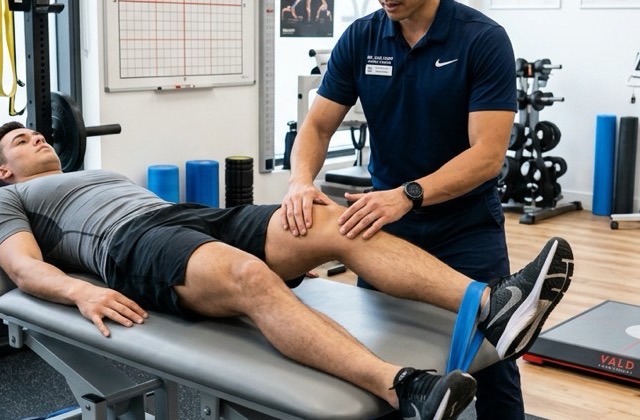
Treat the tissue, fix the cause
Musculoskeletal physiotherapy covers the soft-tissue half of movement: muscles, tendons, ligaments, bursae and fascia. Most of these problems are load problems — too much too soon, or too little for too long.
We diagnose which tissue is involved and why it became irritable, calm it with hands-on treatment, then rebuild its tolerance with graded loading. Passive treatment alone feels good and relapses; capacity is what holds.
- Clear diagnosis of which tissue is involved, explained in plain terms
- The activity or load change that triggered it identified, not guessed
- Hands-on treatment paired with a loading programme from day one
- Progress re-measured every fourth session against your baseline
Soft tissue, joints and everything between
The musculoskeletal problems we see most across work, sport and daily life.
-

Frozen Shoulder
Staged mobilisation and capsular stretching through each phase of the condition.
-
Tendinopathy
Achilles, patellar, gluteal and elbow tendons rebuilt with progressive loading.
-
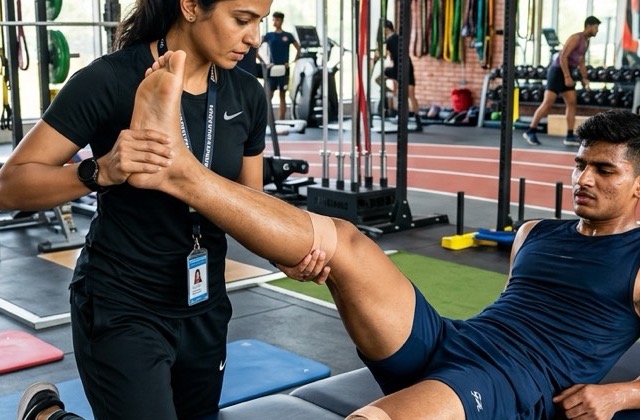
Muscle Strains & Tears
Staged return to load after a calf, hamstring, quadriceps or shoulder strain.
-
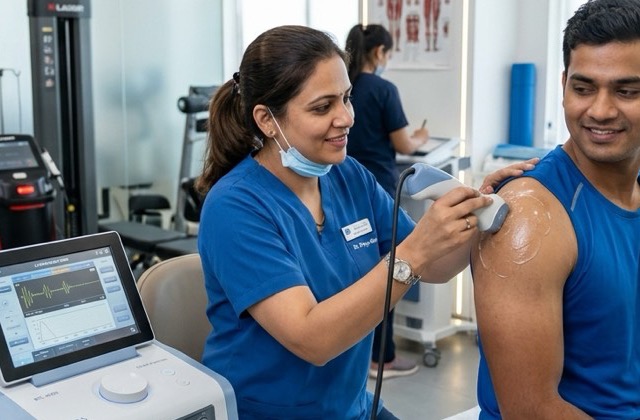
Bursitis
Settling irritated hip, shoulder and knee bursae, then removing the compressive load.
-

Repetitive Strain Injury
Work-related forearm, wrist and shoulder overload — technique and load both addressed.
-
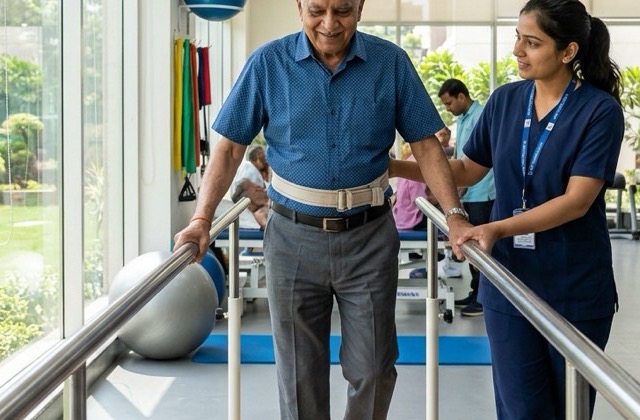
Ligament Sprains
Ankle, knee and wrist ligaments restored with proprioceptive and strength work.
-
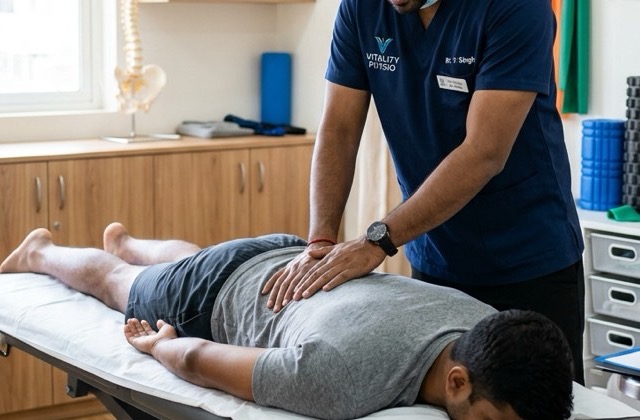
Myofascial Pain
Trigger-point release and postural correction for persistent muscular pain.
-
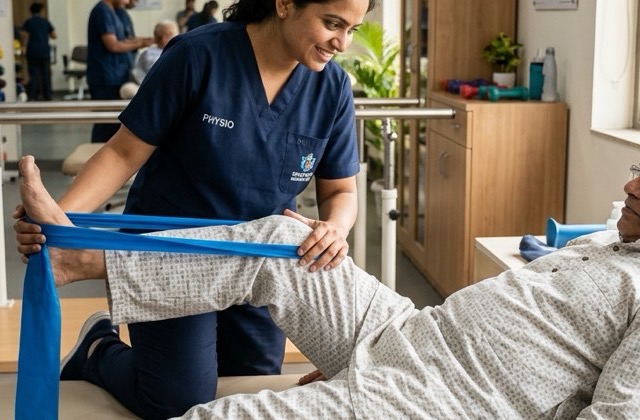
Joint Stiffness
Restoring range lost to injury, immobilisation or long-standing disuse.
Not seeing your condition? Contact us or call +91 99900 96269.
Hands on, then loaded up
Manual therapy opens a window. Loading is what makes the change stick.
Book an Appointment-
01
Soft Tissue Release
Targeted manual work on the muscle and fascia restricting your movement.
-
02
Progressive Loading
The core of tendon and muscle recovery — measured, staged capacity building.
-
03
Joint Mobilisation
Restoring accessory movement at stiff joints so loading can progress.
-
04
Dry Needling
Precise trigger-point release where muscular pain limits your ability to load.
-
05
Electrotherapy
Ultrasound, TENS and IFT as short-term adjuncts in the irritable phase.
-
06
Activity Modification
Adjusting the load between sessions, where most of the recovery happens.
Four stages, clear milestones
Soft tissue heals on a timeline. Knowing which stage you are in keeps expectations honest.
-
1
Initial Assessment
Which tissue, why it became irritable, and whether physiotherapy is the right answer.
-
2 Weeks 1–2
Settle & Diagnose
Hands-on treatment and load reduction to bring symptoms to a workable level.
-
3 Weeks 2–8
Rebuild Capacity
Progressive loading of the tissue, re-measured every fourth session.
-
4 Weeks 8–12
Return & Prevent
Full return to your activity, with a maintenance plan to stop it recurring.
Stage one costs nothing and takes twenty minutes.
Book your assessmentWhat makes our care different
-
One therapist, start to finish
You are not passed between staff. The physiotherapist who assesses you is the one who treats you through to discharge.
-
Objective progress tracking
Range, strength and function are measured and charted — so "getting better" is a number, not a feeling.
-
Honest session estimates
We tell you upfront roughly how many sessions this should take, and we tell you when you no longer need us.
-
Comprehensive initial assessment
A thorough consultation with a physiotherapist before you commit to anything.
-
Extended evening hours
Appointments until 8:30pm on weekdays so treatment fits around work rather than competing with it.
-
Fully equipped gym floor
Proper loading equipment on site — you cannot rebuild strength with resistance bands alone.
Recovery in their words
1,284 verified reviews
- 5
- 92%
- 4
- 6%
- 3
- 1%
- 2
- 0%
- 1
- 1%
3 recent reviews from this programme
-
Verified
Achilles pain for fourteen months and every treatment under the sun. Turned out I needed to load it, not rest it. Running again after ten weeks.
Sameer L. Achilles tendinopathy · 10 weeks -
Verified
The wrist pain was from how I was using my mouse, which nobody had thought to ask about. Fixing that plus the strengthening sorted it.
Pooja H. Repetitive strain · 6 weeks -
Verified
Frozen shoulder is miserable and slow. They explained which phase I was in each time, which made the slowness bearable.
Nandini S. Frozen shoulder · 15 weeks
Start your own recovery — book your consultation today.
Musculoskeletal FAQs
Still unsure? Speak to a physiotherapist on +91 99900 96269 — no charge for the conversation.
What does musculoskeletal physiotherapy cover?
Problems of muscle, tendon, ligament, bursa and joint — strains, tendinopathy, bursitis, frozen shoulder, repetitive strain and joint stiffness. If your pain is mechanical and changes with movement or activity, it usually falls in this category.
Should I rest a tendon problem?
Complete rest usually makes tendinopathy worse. Tendons need load to remodel — the skill is finding the amount that stimulates without irritating. That is most of what we do in the early phase.
How many sessions will I need?
Straightforward strains and joint stiffness often settle in four to six sessions. Long-standing tendinopathy and frozen shoulder run longer, typically ten to sixteen. You get a specific estimate at your first consultation.
Is dry needling painful?
You feel a brief twitch response and sometimes an ache for a day afterwards. It is well tolerated by most people, and it is always optional — the loading programme is what drives the recovery either way.
Do I need a scan first?
Rarely. Most musculoskeletal problems are diagnosed clinically from history and movement testing. We screen for the presentations that do need imaging and refer promptly when we find them.
Why does my pain keep coming back?
Usually because the tissue was settled but never rebuilt to the capacity your activity demands. Passive treatment relieves symptoms; only loading changes tolerance. That is why every programme here ends with a strength phase.
Stop working around the ache
Book an appointment. You will leave knowing which tissue is involved, why, and how long it takes to settle.
- 1638, Dividing Rd, Sector 65, Faridabad
- info@caringhandsphysioclinic.com
- Open until 8:30pm on weekdays & Saturdays
Book your assessment
Tell us what hurts. We will call you back to confirm a time that works.