Manual Therapy Skilled Hands, Lasting Change
Hands-on treatment eases stiffness and calms guarded muscle fast. Paired with the right exercise, that relief becomes permanent rather than something you come back for every fortnight.
- Manual therapy sessions
- 12,000+ Manual therapy sessions
- Years of hands-on practice
- 13+ Years of hands-on practice
- Manual-therapy trained staff
- 11 Manual-therapy trained staff
- Report relief in session one
- 90% Report relief in session one
- Same-day appointments
- Always paired with exercise
- Free 20-min assessment

Relief today, capacity tomorrow
Manual therapy is skilled hands-on treatment of joints and soft tissue — mobilisation, manipulation, myofascial release, trigger-point work. It reduces pain, restores movement and settles protective muscle guarding, often within a single session.
What it does not do on its own is change how much load your body tolerates. That is why every manual therapy session here comes with an exercise prescription. The hands-on work opens the window; the exercise is what keeps it open.
- Every session paired with exercise so relief is not temporary
- Techniques explained before they are used — nothing is a surprise
- Session count estimated upfront, with an end point rather than open-ended visits
- Honest advice when hands-on treatment is not the right answer
When hands-on treatment helps most
Presentations where skilled manual therapy makes a fast, measurable difference.
-
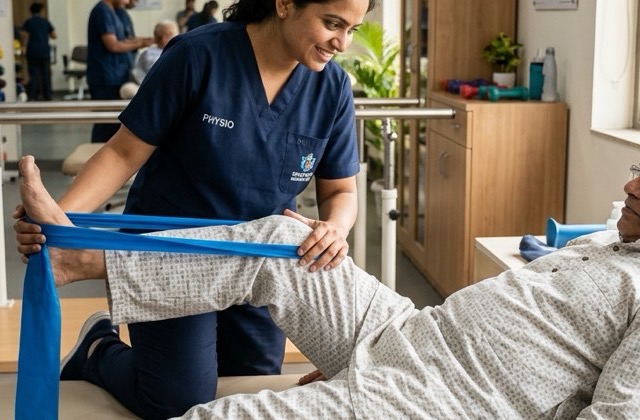
Stiff & Restricted Joints
Restoring accessory movement where a joint has lost its normal glide.
-
Neck Pain & Headaches
Cervical mobilisation for stiffness and cervicogenic headache.
-
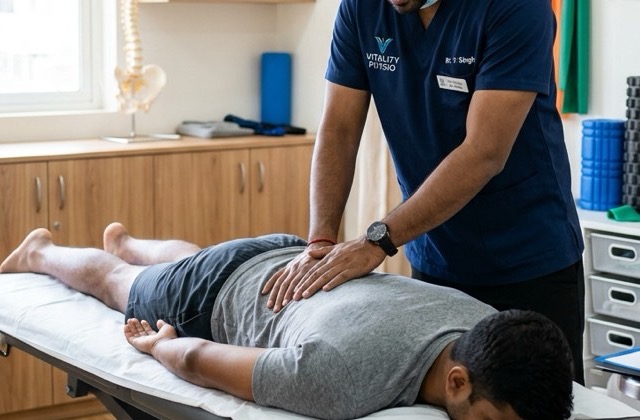
Muscle Guarding & Spasm
Settling protective spasm so normal movement can be practised again.
-

Myofascial Trigger Points
Precise release of the tight bands that refer pain elsewhere.
-
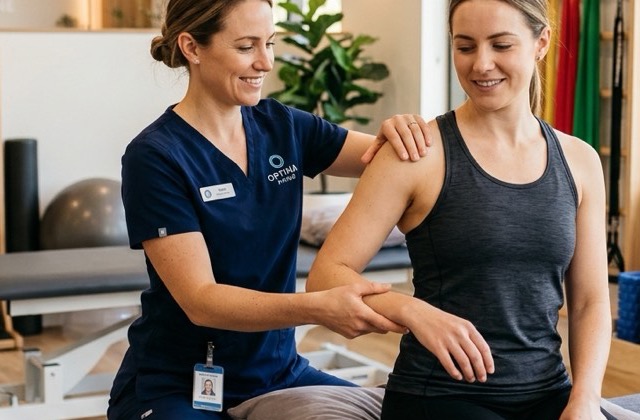
Frozen Shoulder
Graded capsular stretching through each stage of the condition.
-
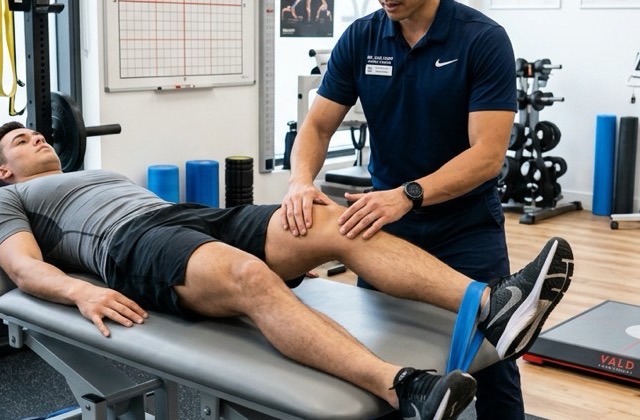
Post-Immobilisation Stiffness
Regaining range after a cast, brace or sling has come off.
-
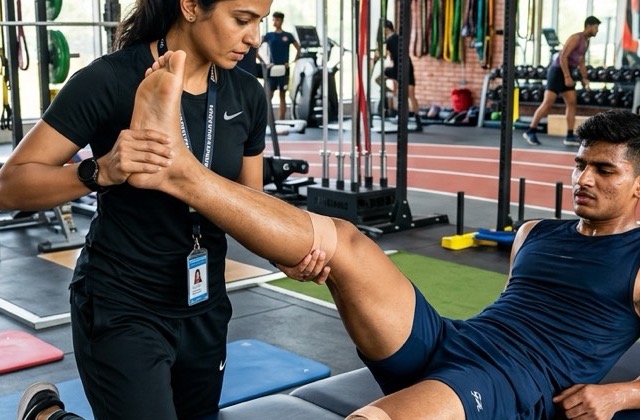
Sports Muscle Tightness
Soft-tissue work between training blocks to keep quality of movement.
-

Scar Tissue Restriction
Mobilising adherent post-surgical scar that is limiting movement.
Not seeing your condition? Contact us or call +91 99900 96269.
A full hands-on toolkit
Which technique, and how much of it, is chosen from what your assessment shows — not from habit.
Book an Appointment-
01
Joint Mobilisation
Graded oscillatory movement to restore glide and ease pain at stiff joints.
-
02
Myofascial Release
Sustained pressure on restricted fascia to release long-standing tightness.
-
03
Trigger Point Therapy
Direct release of the tight bands within muscle that refer pain elsewhere.
-
04
Dry Needling
Fine needles into trigger points where manual pressure alone is not enough.
-
05
Muscle Energy Technique
Using your own contractions to lengthen restricted muscle safely.
-
06
Manual Traction
Hands-on decompression of compressed spinal segments and nerve roots.
Four stages, then discharge
Manual therapy should have an end point. Here is how we get you to it.
-
1
Initial Assessment
Movement testing to establish what is restricted and whether hands-on treatment will help.
-
2 Weeks 1–2
Relieve
Hands-on treatment to reduce pain and restore range, paired with a starter home programme.
-
3 Weeks 2–6
Consolidate
Less hands-on, more loading, so the range gained becomes range you can control.
-
4 Weeks 6–8
Discharge
A maintenance routine and clear guidance on when it is worth coming back.
Stage one costs nothing and takes twenty minutes.
Book your assessmentWhat makes our care different
-
One therapist, start to finish
You are not passed between staff. The physiotherapist who assesses you is the one who treats you through to discharge.
-
Objective progress tracking
Range, strength and function are measured and charted — so "getting better" is a number, not a feeling.
-
Honest session estimates
We tell you upfront roughly how many sessions this should take, and we tell you when you no longer need us.
-
Comprehensive initial assessment
A thorough consultation with a physiotherapist before you commit to anything.
-
Extended evening hours
Appointments until 8:30pm on weekdays so treatment fits around work rather than competing with it.
-
Fully equipped gym floor
Proper loading equipment on site — you cannot rebuild strength with resistance bands alone.
Recovery in their words
1,284 verified reviews
- 5
- 92%
- 4
- 6%
- 3
- 1%
- 2
- 0%
- 1
- 1%
3 recent reviews from this programme
-
Verified
I had been having massages every fortnight for two years. Here they treated it and then gave me the exercises that meant I stopped needing to come.
Harish N. Neck stiffness · 7 weeks -
Verified
The headaches came from my neck, which I had never connected. Four sessions of mobilisation and the right exercises and they have largely gone.
Shalini M. Cervicogenic headache · 5 weeks -
Verified
After eight weeks in a cast my wrist barely moved. They got the range back and were clear about how long it would take.
Rohan I. Post-immobilisation stiffness · 6 weeks
Start your own recovery — book your consultation today.
Manual therapy FAQs
Still unsure? Speak to a physiotherapist on +91 99900 96269 — no charge for the conversation.
How is manual therapy different from massage?
Massage works on soft tissue for relaxation and circulation. Manual therapy is a clinical intervention chosen from an assessment — specific joint mobilisations, targeted release and technique selected to address a diagnosed restriction, always paired with exercise.
Will it hurt?
Some techniques produce brief discomfort, particularly trigger-point work, and an ache for a day afterwards is normal. We work to a pain scale you control and change technique if something is genuinely painful.
How many sessions will I need?
Most people need four to eight. If you are still coming after twelve sessions with no plan for discharge, something is wrong — manual therapy should have an end point, and we set one at your assessment.
Do I have to do exercises as well?
Yes, and we would rather be straight about it. Hands-on treatment alone gives relief that fades. The exercise is what changes your tolerance so the relief holds.
Do you do spinal manipulation?
We use graded mobilisation as standard. High-velocity manipulation is used selectively, only where it is clearly indicated and safe, and never without explaining it and getting your agreement first.
Can I have manual therapy while pregnant?
Yes, with technique and positioning adapted for each trimester. Pregnancy-related pelvic and low back pain responds well to hands-on treatment. Tell us at booking so we can allow the right setup.
Relief that does not wear off
Book an appointment. You will leave knowing whether hands-on treatment is the right answer and how many sessions it should take.
- 1638, Dividing Rd, Sector 65, Faridabad
- info@caringhandsphysioclinic.com
- Open until 8:30pm on weekdays & Saturdays
Book your assessment
Tell us what hurts. We will call you back to confirm a time that works.