Orthopedic Rehabilitation That Gets You Moving Again
Recovering from a fracture, a joint replacement or years of arthritis pain? We build your rehab plan around your body, your goals and your timeline — not a generic technique.
- Patients rehabilitated
- 8,500+ Patients rehabilitated
- Years of ortho practice
- 13+ Years of ortho practice
- Specialist physiotherapists
- 7 Specialist physiotherapists
- Report less pain by week 4
- 94% Report less pain by week 4
- Same-day appointments
- No referral needed
- Free 20-min assessment
Rehabilitation built around your injury
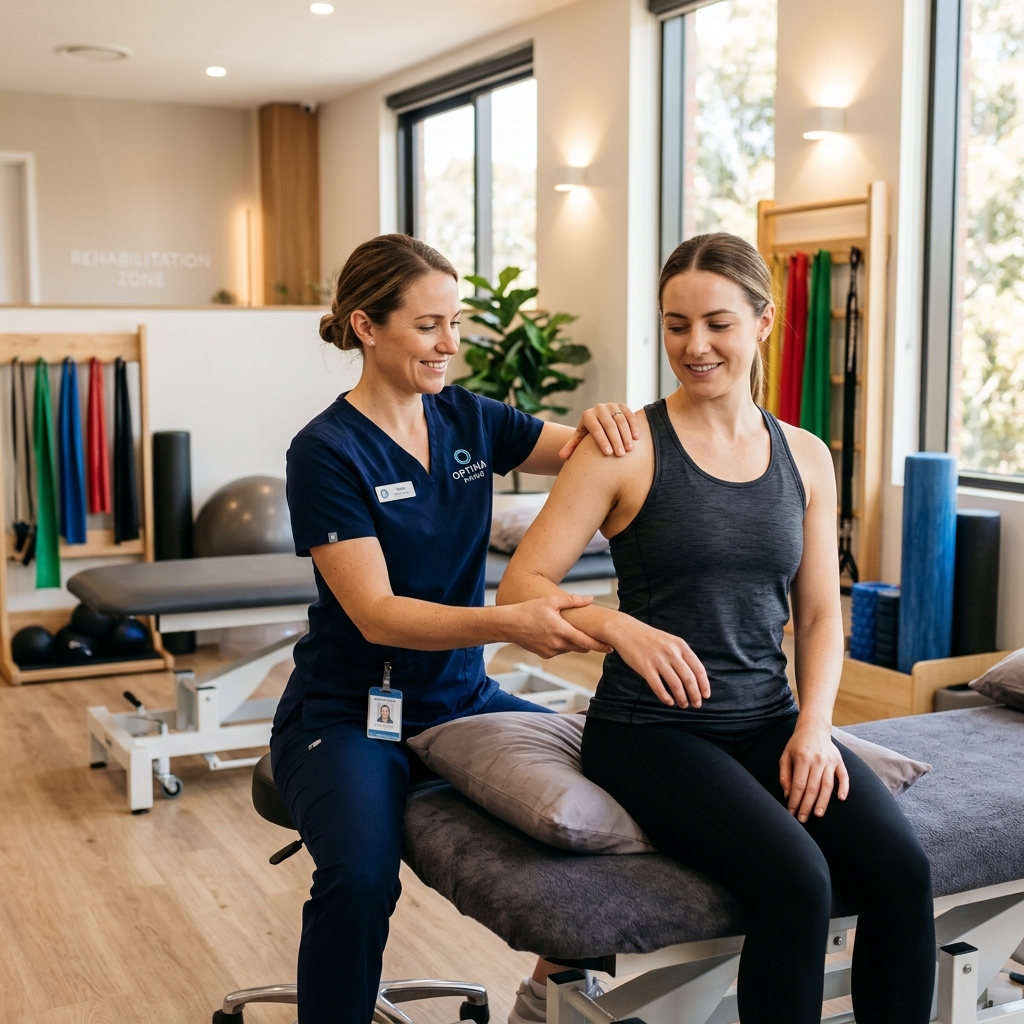
Orthopedic rehabilitation restores strength, mobility and confidence to the musculoskeletal system — your bones, joints, muscles, ligaments and tendons. It is the difference between an injury that heals and an injury that heals properly.
Our physiotherapists start with a full biomechanical assessment, identify the real driver of your pain (which is often not where it hurts), and then progress you through a staged loading programme. You will always know which stage you are in, what the next milestone is, and what you should be able to do when you reach it.
- One-to-one sessions — never a shared floor with six other patients
- Written home programme with video demonstrations after every visit
- Progress re-measured every fourth session, with the plan adjusted
- Direct coordination with your orthopedic surgeon where relevant
If it hurts to move, we probably treat it
The most common orthopedic presentations we see week to week. Not on the list? Call us — our team is happy to help.
-
Knee Osteoarthritis
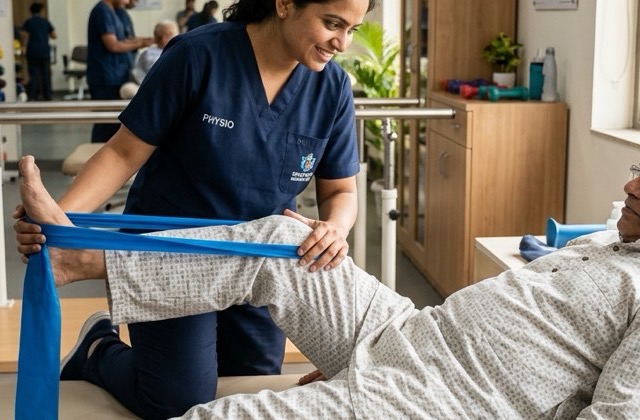
Load management, quadriceps strengthening and joint mobilisation to reduce stiffness and delay surgery.
-
Post-Fracture Recovery
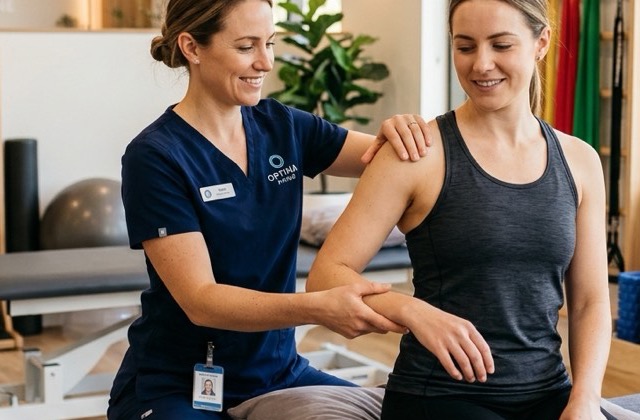
Restoring range and strength safely after cast or brace removal, without overloading healing bone.
-
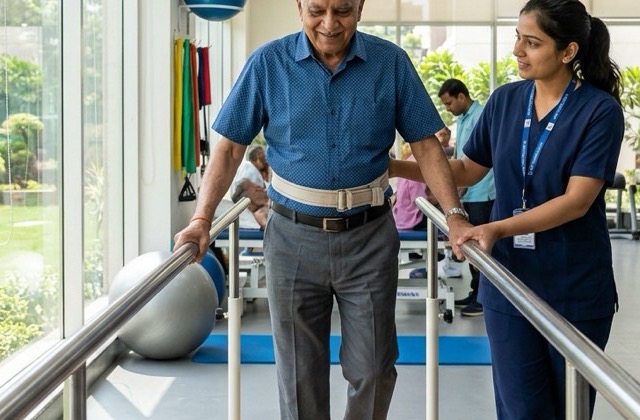
Knee & Hip Replacement
Structured post-operative techniques to hit each surgical milestone on schedule.
-
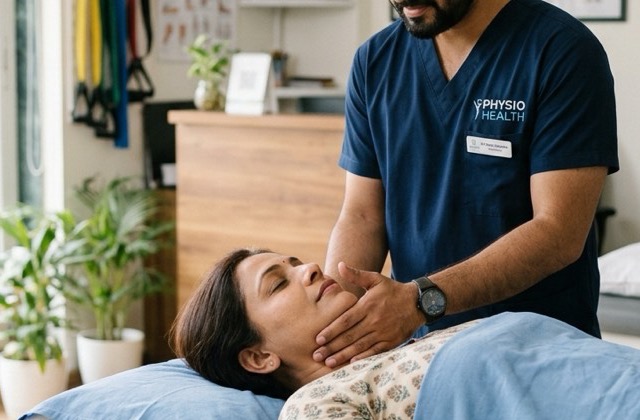
Frozen Shoulder
Staged mobilisation and capsular stretching to recover overhead reach through each phase.
-
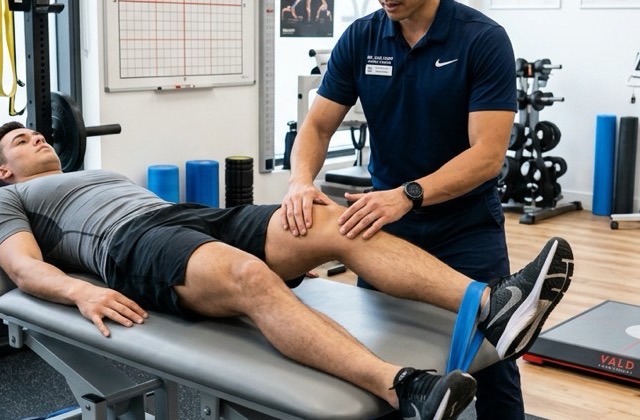
Rotator Cuff Injury
Graded tendon loading and scapular control work for shoulder pain and weakness.
-
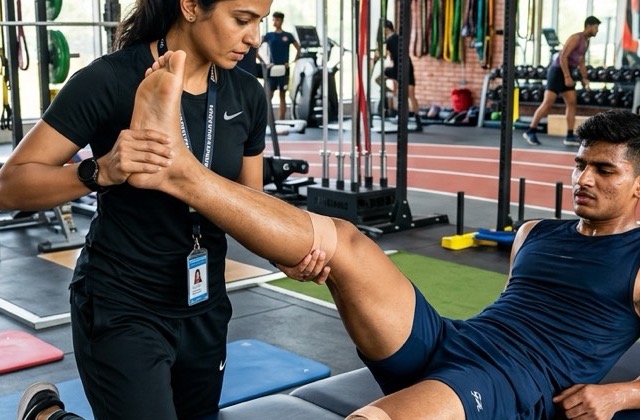
ACL & Meniscus Rehab
Pre-hab and post-op programmes with objective return-to-sport testing before you go back.
-
Tennis & Golfer's Elbow
Eccentric loading, manual therapy and grip retraining for stubborn elbow tendinopathy.
-
Plantar Fasciitis
Heel pain relief through calf loading, foot intrinsic work and gait correction.
-
Ankle Sprains & Instability
Proprioceptive retraining so the ankle stops giving way on uneven ground.
-
Rheumatoid & Inflammatory Arthritis
Joint protection strategies and gentle conditioning that respect flare cycles.
-
Carpal Tunnel Syndrome
Nerve gliding, splinting guidance and workstation changes to settle hand numbness.
-
Tendinitis & Bursitis
Settling the irritated tissue first, then rebuilding capacity so it does not recur.
Not seeing your condition? Contact us or call +91 99900 96269.
Hands-on therapy, backed by measurement
Every technique below is chosen for a reason and reviewed against your progress — we do not run the same passive routine for six weeks.
Book an Appointment-
01
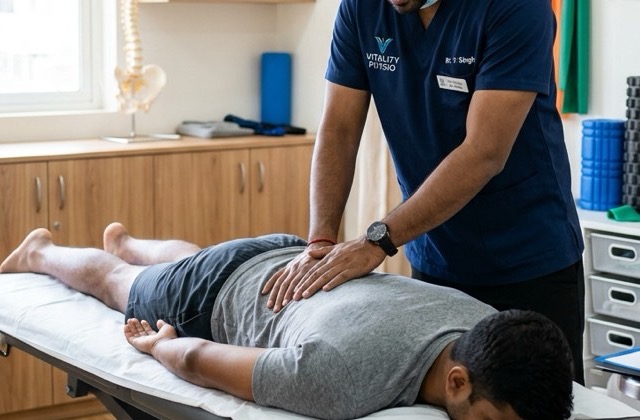
Manual Therapy & Joint Mobilisation
Skilled hands-on techniques to free stiff joints, ease guarding and restore accessory movement.
-
02
Progressive Therapeutic Exercise
The core of orthopedic recovery — measured, progressive loading that rebuilds real capacity.
-
03
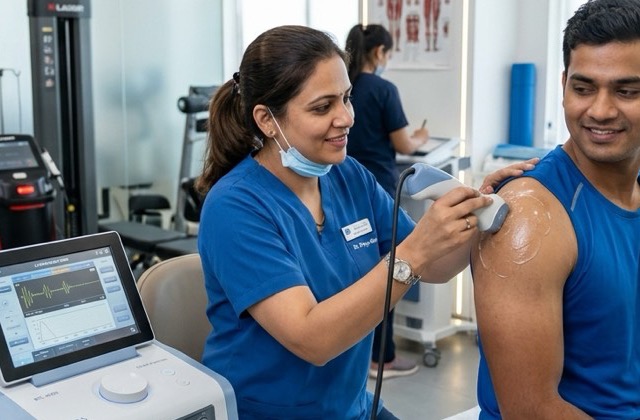
Electrotherapy (TENS, IFT, US)
Targeted pain modulation and tissue stimulation used as an adjunct in the early, painful phase.
-
04
Dry Needling
Precise trigger-point release for muscular pain that is limiting your ability to load.
-
05
Kinesiology & Rigid Taping
External support and proprioceptive feedback during the return-to-activity phase.
-
06
Gait & Balance Retraining
Correcting the limp or compensation pattern that keeps reloading the injured side.
-
07
Traction & Decompression
Mechanical offloading for compressed joints and nerve-related referral pain.
-
08
Ergonomic & Activity Coaching
Changing what you do between sessions, which is where most of your recovery actually happens.
Four stages, clear milestones
You will never wonder how long this will take or whether it is working. Here is exactly how it runs.
-
1
Initial Assessment
A physiotherapist screens your movement, tests the joint, reviews any scans and tells you honestly whether physiotherapy is the right answer.
-
2 Session 1
Diagnosis & Plan
You leave with a working diagnosis, a session estimate, a cost estimate and your first home programme. No open-ended packages.
-
3 Weeks 1–6
Active Rehabilitation
Hands-on treatment plus supervised loading, twice weekly to start. Re-measured every fourth session against your baseline.
-
4 Weeks 6–12
Strength & Discharge
Session frequency drops as you take over. We discharge you with a maintenance programme and a standing invitation to check back in.
Stage one costs nothing and takes twenty minutes.
Book your assessmentWhat makes our orthopedic programme different
-
One therapist, start to finish
You are not passed between staff. The physiotherapist who assesses you is the one who treats you through discharge.
-
Objective progress tracking
Range of motion, strength and function are measured and charted — so "getting better" is a number, not a feeling.
-
Surgeon-aligned techniques
Post-operative plans follow your surgeon's technique, with direct communication when timelines need adjusting.
-
Honest session estimates
We tell you upfront roughly how many sessions this should take, and we tell you when you no longer need us.
-
Extended evening hours
Appointments until 8pm on weekdays so rehabilitation fits around work rather than competing with it.
-
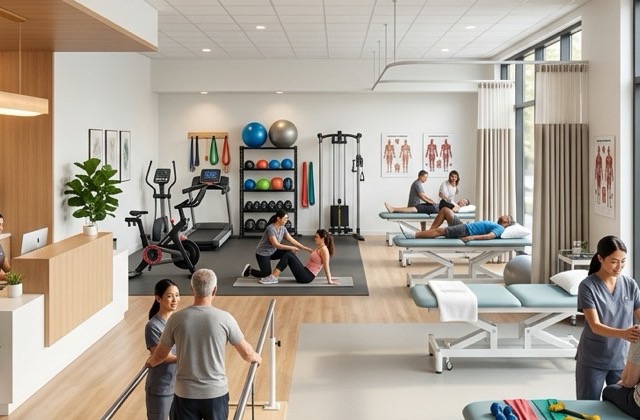
Fully equipped gym floor
Proper loading equipment on site — you cannot rebuild a knee with resistance bands alone.
Recovery in their words
1,284 verified reviews
- 5
- 92%
- 4
- 6%
- 3
- 1%
- 2
- 0%
- 1
- 1%
3 recent reviews from this programme
-
Verified
I had been told a knee replacement was inevitable. Eleven weeks of loading work later I am walking my usual morning route again without a stick. They measured everything, so I could actually see it working.
Rakesh M. Knee osteoarthritis · 11 weeks -
Verified
Post-ACL rehab that did not rush me and did not baby me either. The return-to-sport testing at the end gave me the confidence to actually play again instead of just hoping.
Sneha K. ACL reconstruction · Return to sport -
Verified
Frozen shoulder for eight months and two rounds of medication with no change. Here they explained which phase I was in and what was realistic. I can reach the top shelf again.
Anita D. Adhesive capsulitis · 14 weeks
Start your own recovery — book your consultation today.
Orthopedic rehabilitation FAQs
Still unsure? Speak to a physiotherapist on +91 99900 96269 — no charge for the conversation.
Do I need a doctor's referral to start orthopedic physiotherapy?
No. You can book an assessment directly with us. If your presentation needs imaging or a specialist opinion first, we will tell you at the assessment and help you get referred rather than starting treatment that will not help.
How many sessions will my recovery take?
Most straightforward orthopedic injuries settle within 6 to 8 sessions across 4 to 6 weeks. Post-surgical rehabilitation and long-standing arthritis typically run 12 to 16 sessions across 3 months. You will get a specific estimate at your first consultation.
Will the treatment be painful?
Rehabilitation should feel like effort, not injury. Some manual therapy and early loading produces temporary discomfort that settles within a day, and we work to a pain scale you control. If something is genuinely painful, we change it.
How soon after surgery can I start rehabilitation?
Often within days, and starting early usually improves the outcome. We follow your surgeon's technique for weight-bearing and range limits, so bring your operative notes or discharge summary to the first session.
Can physiotherapy help me avoid joint replacement surgery?
For many people with moderate knee or hip osteoarthritis, a structured strengthening and load-management programme meaningfully reduces pain and can defer surgery. It cannot reverse cartilage loss, and we will tell you plainly if we think surgery is the better route for you.
What should I bring and wear to my first appointment?
Wear or bring loose clothing that lets us see the affected area — shorts for a knee, a vest for a shoulder. Bring any X-rays, MRI reports, operative notes and a list of current medication.
What happens if I am not improving?
We re-measure every fourth session precisely so this does not go unnoticed. If the numbers are not moving, we change the plan or refer you onward. We will not keep booking sessions that are not working.
Stop working around the pain
Book an appointment. You will leave knowing what is wrong, whether physiotherapy will fix it, and roughly how long it will take.
- 1638, Dividing Rd, Sector 65, Faridabad
- info@caringhandsphysioclinic.com
- Open until 8:30pm on weekdays & Saturdays
Book your assessment
Tell us what hurts. We will call you back to confirm a time that works.