Sports Injury Rehabilitation Back to Play, Not Just Pain Free
Being pain free and being ready to compete are different things. We test the difference before we clear you — because re-injury usually happens to people who returned too early.
- Athletes rehabilitated
- 5,200+ Athletes rehabilitated
- Years in sports rehab
- 10+ Years in sports rehab
- Sports-trained therapists
- 7 Sports-trained therapists
- Return to previous level
- 89% Return to previous level
- Same-week appointments
- Objective return-to-sport testing
- Free 20-min assessment
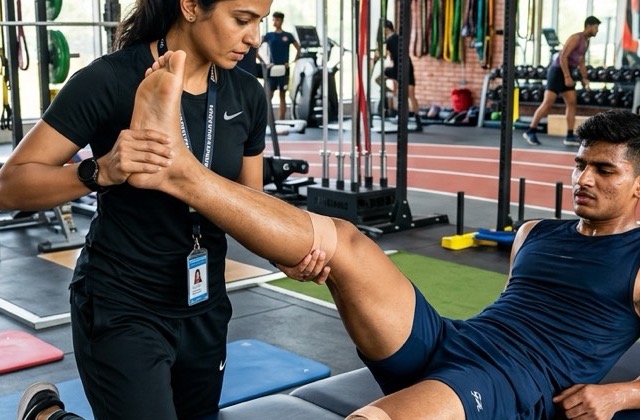
Rehab that ends with a test, not a guess
Sports rehabilitation restores strength, power and control under the loads your sport actually demands — cutting, landing, sprinting, throwing. Tissue healing is only the first half; capacity is the half that prevents the next injury.
We assess movement and strength deficits, load you progressively through each phase, and finish with objective criteria — limb symmetry, hop testing, sport-specific drills — before clearing a return. If the numbers are not there, we say so.
- Limb symmetry and hop testing before any return-to-sport clearance
- Phase-based programme with entry criteria for each stage
- Coordination with your coach or trainer on load management
- Prevention programme handed over at discharge, not just a rehab plan
The injuries that keep athletes out
Common presentations across running, racket sports, football, cricket and the gym.
-
ACL Injury & Reconstruction
Pre-hab and full post-operative pathway to criteria-based return to sport.
-
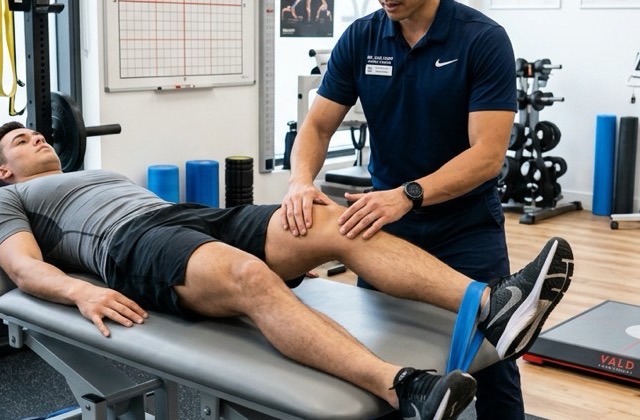
Hamstring Strain
Eccentric loading and sprint reintroduction to cut a high re-injury rate.
-
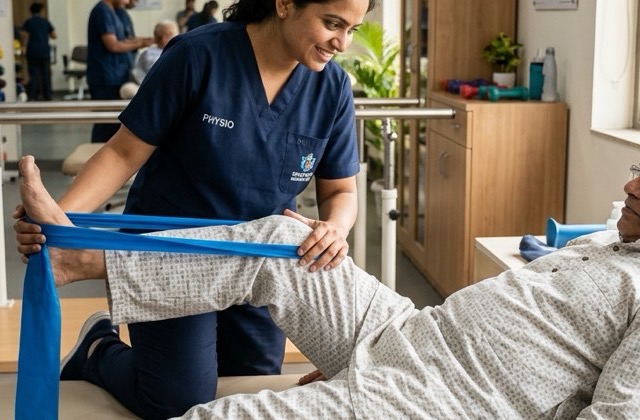
Meniscus Tears
Loading programmes that often avoid surgery, and rehab that supports it when needed.
-
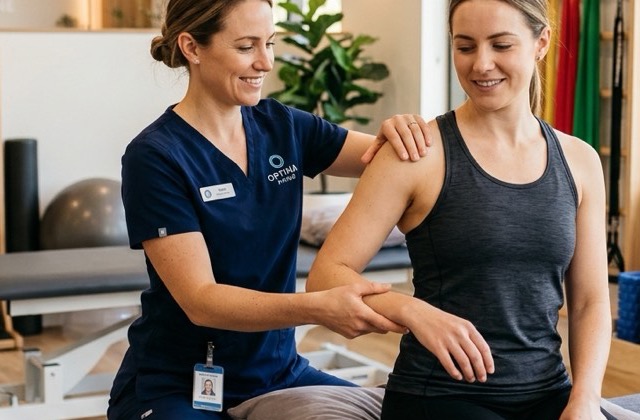
Rotator Cuff & Shoulder
Throwing and overhead athletes — scapular control plus graded tendon loading.
-
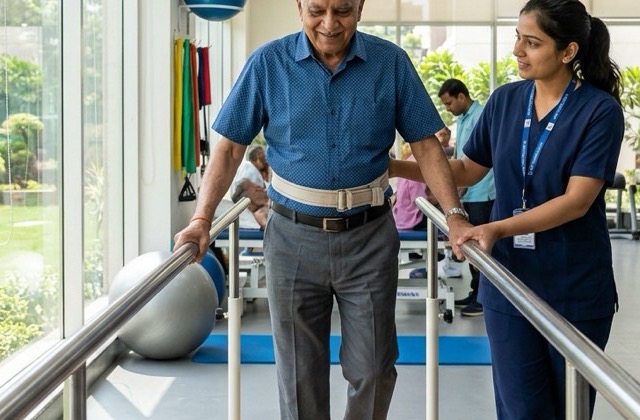
Ankle Sprains
Proprioceptive retraining so the ankle stops rolling on uneven ground.
-
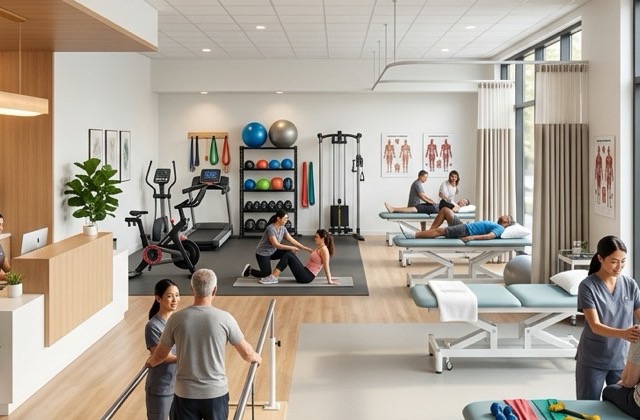
Runner's Knee & ITB Syndrome
Hip strength and running mechanics, not just rest and stretching.
-
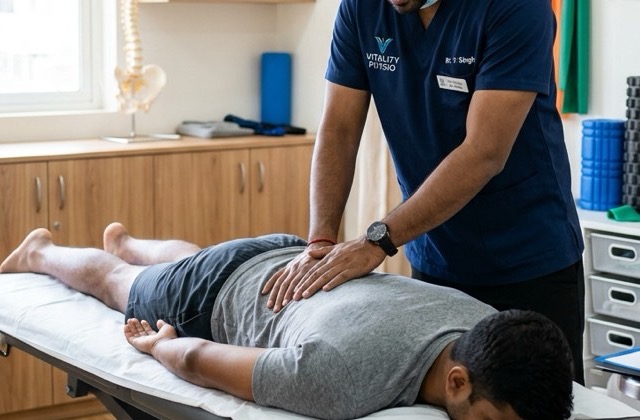
Shin Splints & Stress Injury
Load management and gait work to settle bone stress and get mileage back.
-
Tendinopathy
Achilles, patellar and elbow tendons — progressive loading over passive treatment.
Not seeing your condition? Contact us or call +91 99900 96269.
Load, test, progress
Passive treatment has a place early. Everything after that is about building capacity the sport demands.
Book an Appointment-
01
Progressive Loading
Phase-based strength and power work with clear criteria to move up.
-
02
Return-to-Sport Testing
Hop tests, limb symmetry and sport-specific drills before clearance.
-
03
Biomechanical Analysis
Running, landing and throwing mechanics — finding the load that caused it.
-
04
Dry Needling
Rapid trigger-point release for muscle restricting your training.
-
05
Kinesiology & Rigid Taping
Support and proprioceptive feedback through the return-to-play phase.
-
06
Manual Therapy
Hands-on work to restore joint range so loading can progress on schedule.
Four phases, criteria to pass
You move to the next phase when you meet its criteria — not when the calendar says so.
-
1
Initial Assessment
Injury diagnosis, deficits identified and a realistic timeline for your sport and season.
-
2 Weeks 1–3
Protect & Restore
Settle symptoms, restore range and start loading what can safely be loaded.
-
3 Weeks 3–10
Build Capacity
Strength, power and control to symmetry targets, with running or throwing reintroduced.
-
4 Weeks 10+
Return to Sport
Sport-specific drills, objective clearance testing, and a prevention programme to keep.
Stage one costs nothing and takes twenty minutes.
Book your assessmentWhat makes our care different
-
One therapist, start to finish
You are not passed between staff. The physiotherapist who assesses you is the one who treats you through to discharge.
-
Objective progress tracking
Range, strength and function are measured and charted — so "getting better" is a number, not a feeling.
-
Honest session estimates
We tell you upfront roughly how many sessions this should take, and we tell you when you no longer need us.
-
Comprehensive initial assessment
A thorough consultation with a physiotherapist before you commit to anything.
-
Extended evening hours
Appointments until 8:30pm on weekdays so treatment fits around work rather than competing with it.
-
Fully equipped gym floor
Proper loading equipment on site — you cannot rebuild strength with resistance bands alone.
Recovery in their words
1,284 verified reviews
- 5
- 92%
- 4
- 6%
- 3
- 1%
- 2
- 0%
- 1
- 1%
3 recent reviews from this programme
-
Verified
Third hamstring tear in two seasons before I came here. They found the strength deficit nobody had tested for. Two seasons since, no recurrence.
Arjun T. Hamstring strain · 14 weeks -
Verified
Nine months of ACL rehab that did not rush me and did not baby me. The testing at the end is what actually gave me confidence to play again.
Nikita G. ACL reconstruction · 9 months -
Verified
They looked at how I run rather than just treating the sore knee. Changing my cadence fixed something six months of rest had not.
Vivek D. Runner's knee · 8 weeks
Start your own recovery — book your consultation today.
Sports injury FAQs
Still unsure? Speak to a physiotherapist on +91 99900 96269 — no charge for the conversation.
How soon can I get back to my sport?
It depends on the tissue and the sport. A mild ankle sprain may be two to four weeks; a hamstring strain six to twelve; an ACL reconstruction nine to twelve months. We clear you on test results rather than dates, because returning early is the single biggest re-injury risk.
What is return-to-sport testing?
A battery of objective measures — single and triple hop distance, limb symmetry index, strength testing and sport-specific drills. We generally want your injured side within 90% of the other before clearing contact or competition.
Should I rest or keep training?
Almost never complete rest. We usually keep you training around the injury — upper body, the opposite limb, conditioning — which preserves fitness and makes the return far quicker.
Do I need surgery for a meniscus tear or ACL?
Many meniscus tears settle with a loading programme and never need surgery. ACL decisions depend on your sport, instability and goals — plenty of people manage well without reconstruction. We will give you an honest view and refer for a surgical opinion when it is warranted.
Can you work with my coach?
Yes, and it produces better outcomes. With your permission we share the loading plan and return-to-play criteria so training and rehabilitation are not pulling in opposite directions.
Do you help prevent injuries as well as treat them?
Yes. We screen for the strength and movement deficits that predict injury, and every discharge includes a prevention programme rather than just a rehab plan.
Get back to your sport properly
Book an appointment. You will leave with a diagnosis, a phase plan and a realistic date for your season.
- 1638, Dividing Rd, Sector 65, Faridabad
- info@caringhandsphysioclinic.com
- Open until 8:30pm on weekdays & Saturdays
Book your assessment
Tell us what hurts. We will call you back to confirm a time that works.