Neurological Rehabilitation Rebuilding What the Nervous System Lost
After a stroke, a spinal injury or a progressive condition, recovery is measured in the things you can do again. We train movement, balance and daily function — task by task.
- Neuro patients treated
- 2,100+ Neuro patients treated
- Years in neuro rehab
- 11+ Years in neuro rehab
- Neuro-trained therapists
- 7 Neuro-trained therapists
- Improve mobility scores
- 88% Improve mobility scores
- Home visits available
- Carer training included
- Free 20-min assessment
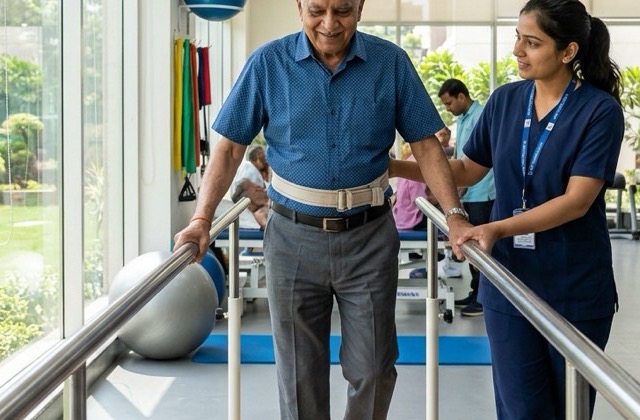
Retraining the brain to move again
Neurological physiotherapy works with the nervous system's capacity to reorganise itself — neuroplasticity. Repetition of the right movement, at the right difficulty, rebuilds the pathways that control it.
We assess tone, sensation, balance, gait and functional ability, then build a programme around the tasks that matter to you: standing from a chair, walking to the gate, holding a cup. Progress is re-measured with standardised scales so gains are visible even when they feel slow.
- Standardised outcome measures — Berg Balance, 10-metre walk, Motor Assessment Scale
- Family and carer coaching so the work continues between sessions
- Home visits for patients who cannot travel comfortably
- Coordination with your neurologist and occupational therapist
Neurological conditions we work with
Whether the event was sudden or the condition is progressive, targeted physiotherapy changes what you can do day to day.
-
Stroke Recovery
Task-specific retraining for weakness, gait and arm function in the months after a stroke.
-
Parkinson's Disease
Large-amplitude movement training, cueing strategies and freezing management.
-
Multiple Sclerosis
Energy-conserving conditioning and balance work planned around relapse and fatigue patterns.
-
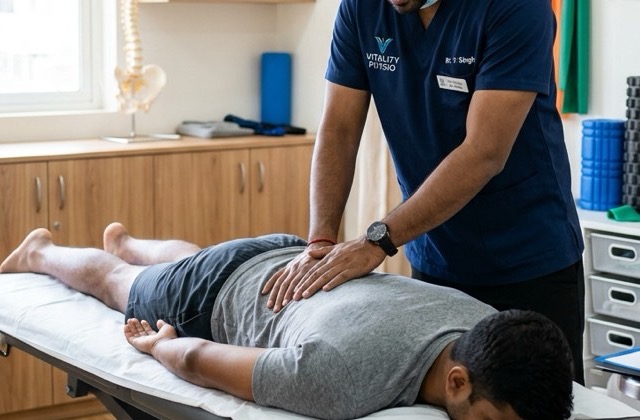
Spinal Cord Injury
Transfer training, wheelchair skills and strengthening of every muscle group still innervated.
-
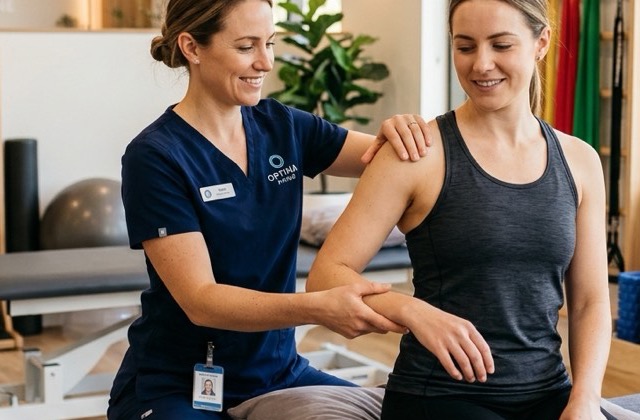
Balance & Vestibular Disorders
Habituation and gaze-stability exercises for dizziness, vertigo and unsteadiness.
-
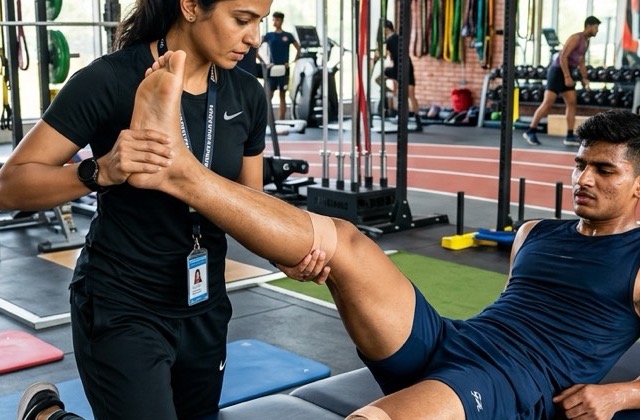
Traumatic Brain Injury
Graded return to movement, coordination and endurance after head injury.
-
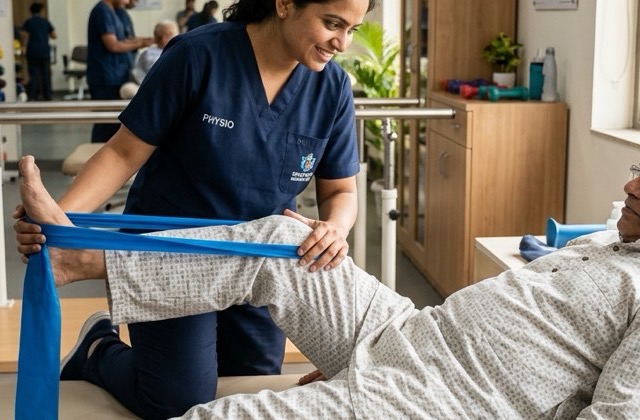
Peripheral Neuropathy
Foot care, proprioceptive training and falls prevention where sensation is reduced.
-
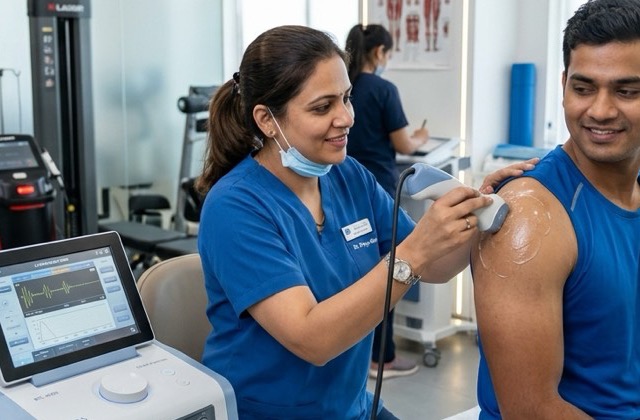
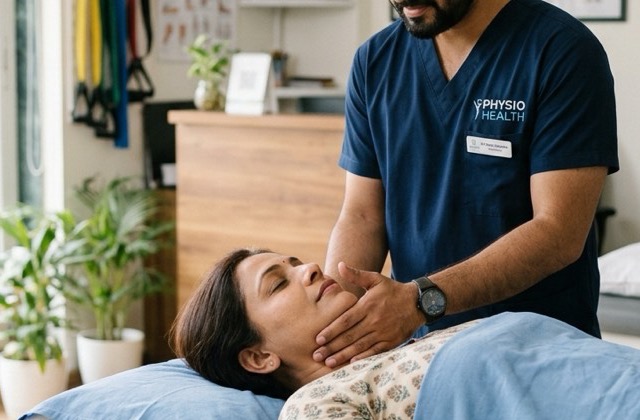
Bell's Palsy & Facial Weakness
Facial neuromuscular retraining and targeted exercise to restore symmetry.
Not seeing your condition? Contact us or call +91 99900 96269.
Repetition with purpose
Neuro recovery needs volume and specificity. Every technique here exists to get more quality repetitions of the movement you want back.
Book an Appointment-
01
Task-Specific Gait Training
Walking practice on parallel bars, treadmill or over ground with graded support.
-
02
Balance & Falls Prevention
Progressive challenge to standing and walking balance in safe, controlled conditions.
-
03
Neuromuscular Facilitation
Hands-on techniques to recruit weak muscles and normalise abnormal tone.
-
04
Functional Electrical Stimulation
Stimulating weak muscle groups so movement can be practised before strength returns.
-
05
Strength & Endurance Work
Building the physical capacity that daily independence actually requires.
-
06
Carer & Home Programme
Training the people around you, because most repetitions happen outside the clinic.
Measured progress, realistic goals
Neuro recovery is long. Clear staging keeps everyone — you, your family and us — working to the same plan.
-
1
Initial Assessment
A neuro-trained physiotherapist screens strength, tone, balance and gait, and tells you honestly what is realistic.
-
2 Session 1
Goal Setting
We agree two or three functional goals that matter to you, and the outcome measures we will track against them.
-
3 Months 1–3
Intensive Retraining
Two to three sessions a week with a daily home programme. Re-measured every fourth session.
-
4 Ongoing
Maintain & Progress
Frequency reduces as you take over. Periodic reviews keep gains from slipping.
Stage one costs nothing and takes twenty minutes.
Book your assessmentWhat makes our care different
-
One therapist, start to finish
You are not passed between staff. The physiotherapist who assesses you is the one who treats you through to discharge.
-
Objective progress tracking
Range, strength and function are measured and charted — so "getting better" is a number, not a feeling.
-
Honest session estimates
We tell you upfront roughly how many sessions this should take, and we tell you when you no longer need us.
-
Comprehensive initial assessment
A thorough consultation with a physiotherapist before you commit to anything.
-
Extended evening hours
Appointments until 8:30pm on weekdays so treatment fits around work rather than competing with it.
-
Fully equipped gym floor
Proper loading equipment on site — you cannot rebuild strength with resistance bands alone.
Recovery in their words
1,284 verified reviews
- 5
- 92%
- 4
- 6%
- 3
- 1%
- 2
- 0%
- 1
- 1%
3 recent reviews from this programme
-
Verified
Eight months after my stroke I was told this was as good as it gets. Six months of proper gait work later I walk to the market on my own. They set goals I actually cared about.
Mahesh P. Stroke recovery · 6 months -
Verified
The freezing episodes were the worst part of Parkinson's for me. The cueing strategies they taught have given me a way through them instead of standing there stuck.
Sudha R. Parkinson's disease · Ongoing -
Verified
They trained my husband as much as they trained me. That is what made the home exercises actually happen every day.
Kavita N. Multiple sclerosis · 9 months
Start your own recovery — book your consultation today.
Neuro rehabilitation FAQs
Still unsure? Speak to a physiotherapist on +91 99900 96269 — no charge for the conversation.
How long after a stroke can physiotherapy still help?
Recovery is fastest in the first six months, but meaningful gains are possible for years afterwards. Neuroplasticity does not have a hard cut-off — what matters is the quality and volume of practice. We regularly see improvement in patients referred a year or more after their stroke.
Do you offer home visits?
Yes. For patients who cannot travel comfortably we run sessions at home, which also lets us adapt your actual living space — stairs, bathroom, bed height — rather than a clinic version of it.
Can physiotherapy slow a progressive condition like Parkinson's or MS?
Physiotherapy does not change the underlying disease. What it reliably does is maintain strength, balance and endurance capacity for longer, and reduce falls — which is usually what determines independence.
How many sessions a week will I need?
Intensive neuro retraining generally works best at continous sessions a week for the first three months, supported by daily home practice. We reduce frequency as you take over the programme.
Will my family need to be involved?
Where possible, yes. Most repetitions happen outside the clinic, and a trained carer makes the difference between a home programme that gets done and one that does not. We coach whoever supports you.
What should I bring to the first appointment?
Any discharge summaries, imaging reports and medication lists, plus the walking aid or brace you currently use. Wear clothing that allows movement.
Independence is built one task at a time
Book an appointment. You will leave knowing what is realistically recoverable and what the programme to get there looks like.
- 1638, Dividing Rd, Sector 65, Faridabad
- info@caringhandsphysioclinic.com
- Open until 8:30pm on weekdays & Saturdays
Book your assessment
Tell us what hurts. We will call you back to confirm a time that works.