
Geriatric Rehabilitation Staying Steady, Staying Independent
One fall changes everything. Strength and balance are trainable at any age — and the programme that protects them is the one that keeps you in your own home.
- Older adults treated
- 3,400+ Older adults treated
- Years of geriatric care
- 13+ Years of geriatric care
- Therapists in this team
- 7 Therapists in this team
- Fewer falls after 12 weeks
- 76% Fewer falls after 12 weeks
- Home visits available
- Gentle, paced sessions
- Free 20-min assessment
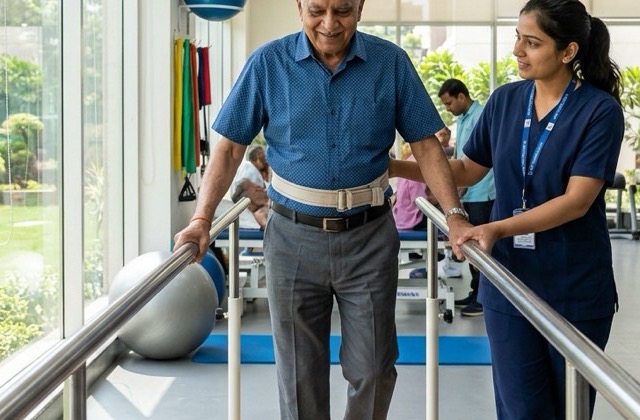
Age is not the reason you are unsteady
Loss of balance is usually loss of strength, sensation and reaction speed — all of which respond to training. Older adults gain strength at much the same rate as younger ones; the programme just has to start at the right level and progress sensibly.
We assess balance, gait, lower limb strength and falls risk using standardised tests, then build a programme you can actually keep up. Where getting to the clinic is difficult, we come to you and adapt your real stairs, bathroom and furniture.
- Falls risk scored with recognised tools — Timed Up and Go, Berg Balance
- Home hazard review: rugs, lighting, bathroom rails, chair heights
- Sessions paced for comfort, with rests built in
- Family kept informed, with a written plan they can support
Keeping later years mobile
What we most often help older adults with. Contact us if your situation is not listed — our team is happy to help.
-
Falls & Unsteadiness
Balance retraining, strength work and reaction training to reduce falls risk.
-

Post-Fracture Recovery
Rebuilding confidence and weight-bearing after a hip, wrist or vertebral fracture.
-
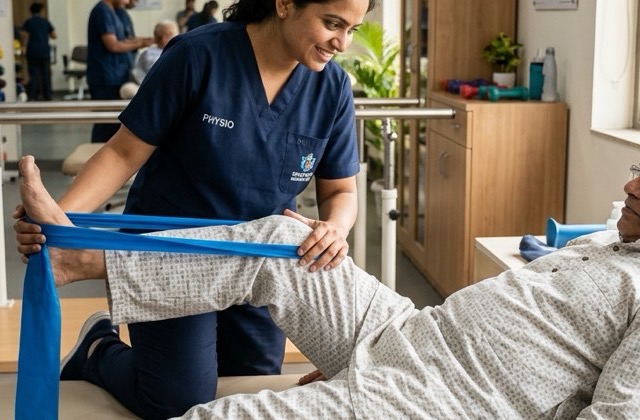
Osteoarthritis
Joint-friendly strengthening that reduces pain without aggravating worn joints.
-
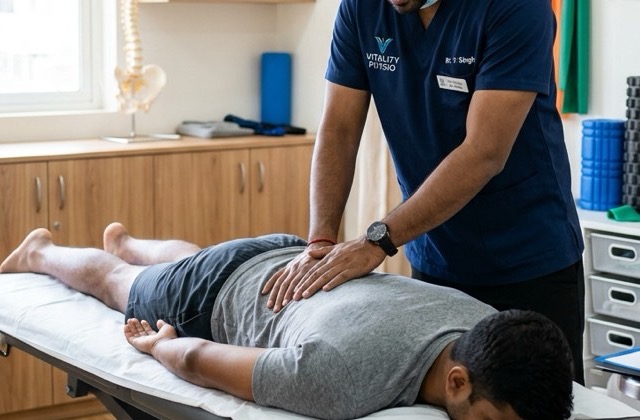
Osteoporosis
Safe weight-bearing and resistance work, with the movements to avoid clearly explained.
-

Post-Hospital Deconditioning
Reversing the strength lost during an illness or a long admission.
-
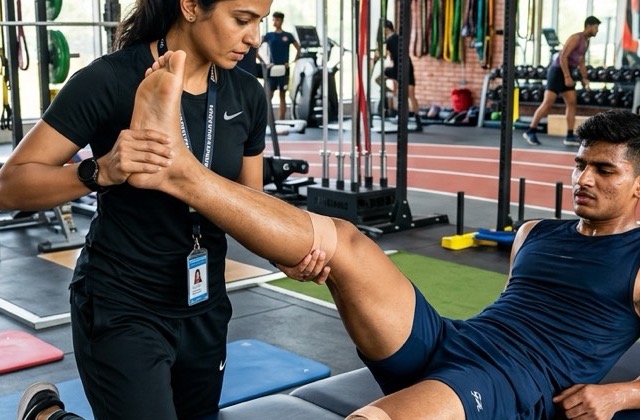
Joint Replacement Recovery
Structured post-operative rehabilitation after hip or knee replacement.
-

Parkinson's & Neuro Conditions
Movement and gait strategies for age-related neurological change.
-

General Frailty
Progressive conditioning to restore the reserve that daily independence needs.
-
Cardiac & Pulmonary Care
Supervised rehabilitation to improve cardiovascular endurance and breathing efficiency.
Not seeing your condition? Contact us or call +91 99900 96269.
Gentle in pace, serious in effect
Sessions are unhurried. The programme underneath them is properly progressive — that is what changes falls risk.
Book an Appointment-
01
Balance & Gait Retraining
Graded challenge to standing and walking stability in safe conditions.
-
02
Progressive Strength Work
Resistance training for the legs and trunk — the strongest predictor of independence.
-
03
Falls Prevention Coaching
Practising how to get up from the floor, and how to move safely when tired.
-
04
Home Hazard Assessment
Reviewing your actual rooms, stairs and bathroom rather than a generic checklist.
-
05
Joint Mobilisation
Hands-on work to ease stiffness so exercise is comfortable enough to continue.
-
06
Walking Aid Fitting
The right stick or frame, at the right height, used the right way.
Four stages, no rush
Progress is measured against tests, not guesswork — so improvement is visible even when it feels gradual.
-
1
Initial Assessment
Balance, strength and gait tested with standardised tools, and your falls risk scored.
-
2 Session 1
Plan & Home Review
A programme set at your level, plus practical changes to the home where they will help most.
-
3 Weeks 1–8
Build Strength
Twice-weekly sessions with a short daily home routine. Re-tested every fourth session.
-
4 Ongoing
Stay Steady
Discharge with a maintenance routine and periodic reviews to keep the gains.
Stage one costs nothing and takes twenty minutes.
Book your assessmentWhat makes our care different
-
One therapist, start to finish
You are not passed between staff. The physiotherapist who assesses you is the one who treats you through to discharge.
-
Objective progress tracking
Range, strength and function are measured and charted — so "getting better" is a number, not a feeling.
-
Honest session estimates
We tell you upfront roughly how many sessions this should take, and we tell you when you no longer need us.
-
Comprehensive initial assessment
A thorough consultation with a physiotherapist before you commit to anything.
-
Extended evening hours
Appointments until 8:30pm on weekdays so treatment fits around work rather than competing with it.
-
Fully equipped gym floor
Proper loading equipment on site — you cannot rebuild strength with resistance bands alone.
Recovery in their words
1,284 verified reviews
- 5
- 92%
- 4
- 6%
- 3
- 1%
- 2
- 0%
- 1
- 1%
3 recent reviews from this programme
-
Verified
After my second fall I had stopped going out alone. Ten weeks of balance work and I am back at my morning walk. They never once made me feel rushed.
Prakash V. Falls & balance · 10 weeks -
Verified
My mother came home from hospital unable to stand from a chair. The home visits made all the difference — they worked with her actual furniture.
Sunita B. Post-hospital deconditioning · 8 weeks -
Verified
Eighty-one and lifting weights, which nobody in my family believed until they saw it. My knees hurt far less than they did a year ago.
Ramesh J. Osteoarthritis · 14 weeks
Start your own recovery — book your consultation today.
Geriatric physiotherapy FAQs
Still unsure? Speak to a physiotherapist on +91 99900 96269 — no charge for the conversation.
Is my parent too old to benefit from physiotherapy?
No. Muscle responds to training well into the nineties, and balance improves with practice at any age. What changes with age is how the programme is paced and progressed, not whether it works.
Do you visit at home?
Yes. Home visits suit patients who cannot travel comfortably, and they let us adapt the actual environment — chair heights, stair rails, bathroom layout — which is often where the falls risk sits.
Is exercise safe with osteoporosis?
Appropriate exercise is one of the better things for osteoporosis, because weight-bearing and resistance work support bone density. Certain movements — heavy end-range spinal flexion and twisting — are best avoided, and we go through those with you specifically.
How quickly will we see a change?
Balance confidence often improves within three to four weeks. Measurable strength gains typically take eight to twelve weeks. We re-test every fourth session so progress is visible rather than assumed.
Can you help after a hip replacement or fracture?
Yes, and starting promptly usually improves the outcome. We follow your surgeon's weight-bearing technique and rebuild walking, stairs and confidence in stages.
Will the sessions be tiring?
They are paced with rests built in, and we set the starting level from what you can currently do. Feeling worked is expected; feeling wiped out for days afterwards is not, and means we adjust.
Independence is worth protecting
Book an appointment, at the clinic or at home. You will leave with a falls risk score and a plan to lower it.
- 1638, Dividing Rd, Sector 65, Faridabad
- info@caringhandsphysioclinic.com
- Open until 8:30pm on weekdays & Saturdays
Book your assessment
Tell us what hurts. We will call you back to confirm a time that works.