Returning to Running After an Injury Without Re-injuring
Why "pain free" is the wrong criterion for going back, how to structure the first six weeks, and the running changes that unload a sore knee or shin.
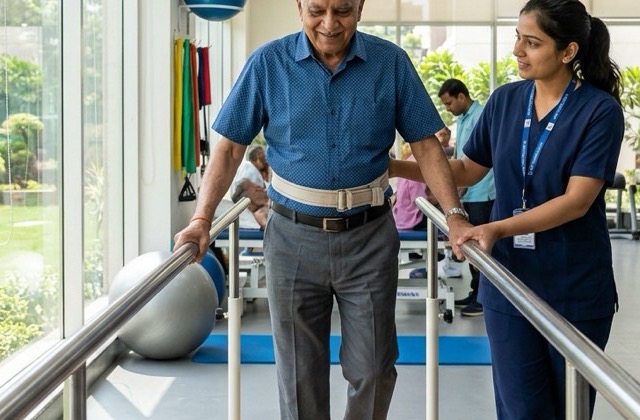
The most common way runners get injured twice is going back the moment it stopped hurting. Pain settles well before tissue capacity returns, so the week you feel ready is usually the week you are most vulnerable.
Pain free is not the same as ready
Before returning to running we want to see specific things, not just an absence of symptoms:
- Single leg calf raises — 25 or more on the injured side, within a few of the other
- Single leg hop — landing controlled, no knee collapsing inward, distance within 90% of the other side
- Walking 30 minutes briskly with no symptoms during or the next day
- Full pain-free range at the affected joint
Structuring the first six weeks
A walk-run progression works because it lets you accumulate running minutes while keeping continuous loading short. A typical build looks like this, three sessions a week on non-consecutive days:
- 1 Week 1 — 1 minute running, 2 minutes walking, repeated 8 times
- 2 Week 2 — 2 minutes running, 2 walking, 8 times
- 3 Week 3 — 3 minutes running, 1 walking, 7 times
- 4 Week 4 — 5 minutes running, 1 walking, 5 times
- 5 Week 5 — 10 minutes running, 1 walking, 3 times
- 6 Week 6 — continuous 25 to 30 minutes at easy pace
Only progress if the previous week produced no next-morning symptoms. If it did, repeat that week rather than pushing on. Repeating a week costs seven days; a re-injury costs six weeks.
Running changes that unload specific tissues
Small gait adjustments meaningfully change where load goes:
- Increasing cadence by 5 to 10% reduces load at the knee and hip — usually the single most effective change for runner's knee
- Shortening your stride slightly reduces braking forces and overstriding
- Running softer, with less audible impact, tends to reduce peak loading rates
- Avoid changing footwear, surface and mileage in the same fortnight — if something flares you will not know which caused it
A caution on cadence: it shifts load rather than removing it. Raising cadence unloads the knee but slightly increases demand on the calf and Achilles, so it is the right change for a sore knee and the wrong one for an irritable Achilles.
Keep strength training through the return
Runners often drop the strength work once they are running again, which is exactly backwards. Two sessions a week of calf, hamstring, quadriceps and hip work is what maintains the capacity you spent the rehabilitation building — and it is well supported as an injury-prevention measure in its own right.
“Repeating a week costs you seven days. Getting it wrong costs you six weeks. Progress on evidence, not on impatience.”
Written by the clinical team at Caring Hands Physio Clinics. General information only — it is not a substitute for an individual assessment. If something here sounds like your problem, book an appointment and we will tell you what applies to you specifically.